The console
WHAT IS HAPPENING, WHILE IT HAPPENS
One operator. One timeline. Every subsystem and every biomarker against mission phase, resolved live rather than reconciled later.
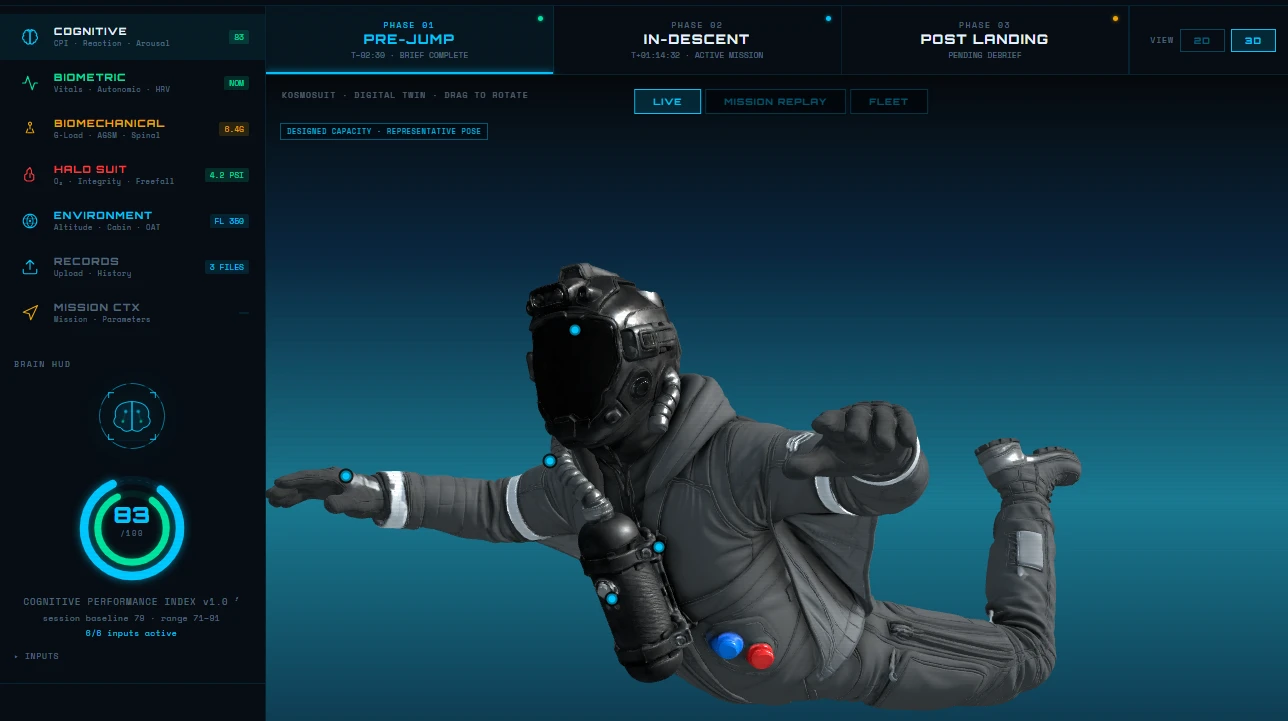
Air profile, live mission monitoring. Kernel360 is in beta.
The suit computer runs it. Mission control sees it. The fleet record keeps it. One data model at every layer, so what the suit measures is what the flight surgeon reads, and what stays in the record for the life of the article.
Request Access to K360Nobody sees the operator, the suit and the mission at the same time.
The suit measures what it was built to measure, forever. Ground monitoring is someone else's system, read after the fact. The maintenance record is a third thing, and it never sees a mission.
Kernel360 is one system across all three. And because the capability is software, a suit already qualified and already issued gets better without touching the hardware.
One operator. One timeline. Every subsystem and every biomarker against mission phase, resolved live rather than reconciled later.
Air profile, live mission monitoring. Kernel360 is in beta.
A diver surfaces. A pilot lands. Then someone reads the logs and works out what happened.
Kernel360 resolves it during. Cognitive, biometric, biomechanical, suit and environment on one timeline, not five systems stitched together at debrief.
And half of it is about the suit. Commanded against actual, continuously, not at inspection. Most systems watch the person. Very few watch the garment.
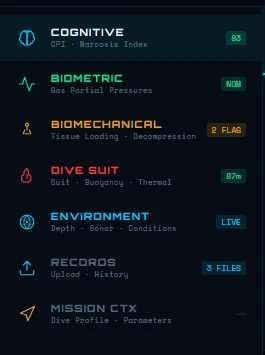
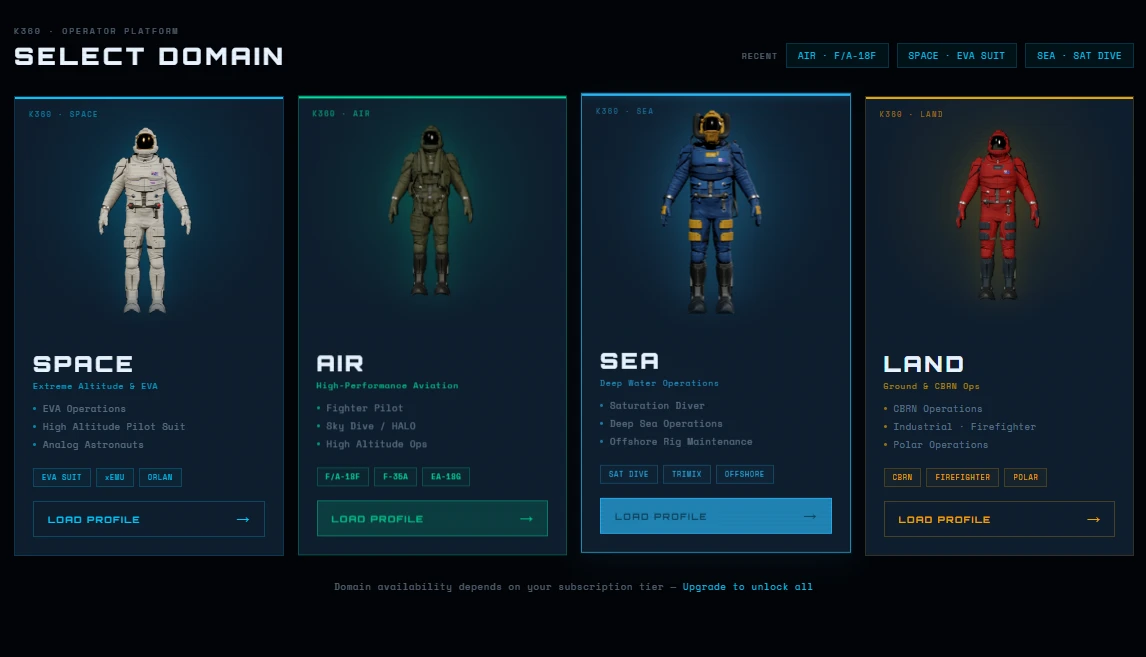
A saturation diver and an EVA crew member have almost nothing in common physiologically. Different parameters, different rates, different thresholds.
The profile changes. The platform does not.
And it does not need a Metakosmos suit. Instrument what you already field.
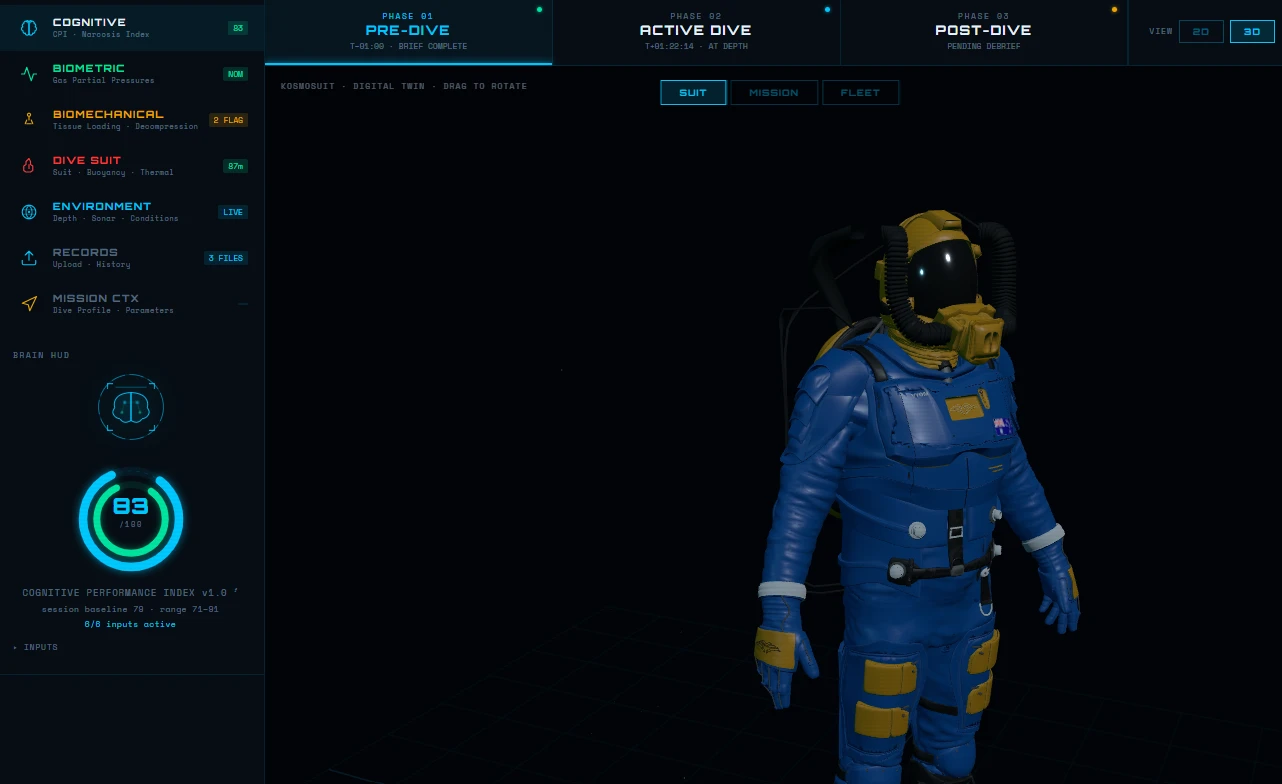
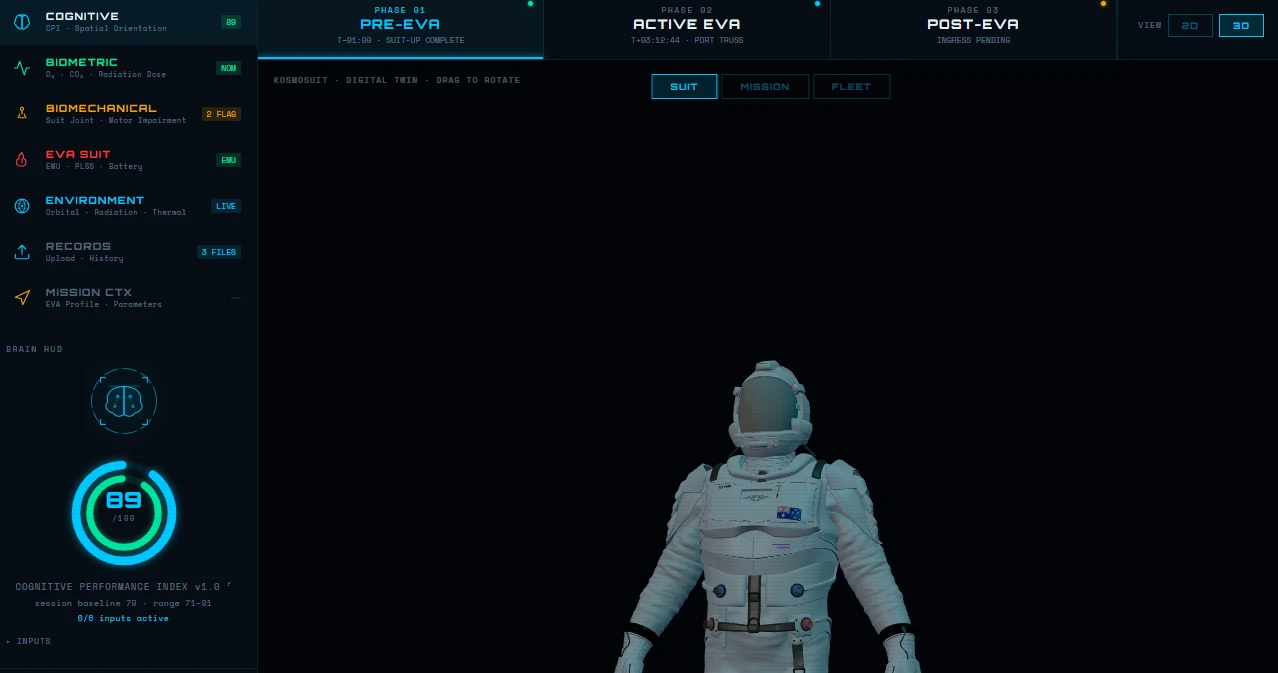
Switching systems usually means starting from zero. Every dive, every sortie, every medical record left behind in the old one.
Not here. Medical records as PDF, DICOM, HL7 or CSV. Dive history as Subsurface or UDDF, and the equivalents across land, air and space. An operator walks in with their service history intact, attached to the specific article that flew it.
Live mission data works the same way. Kernel360 reads what your fleet already produces. Nothing gets replaced.
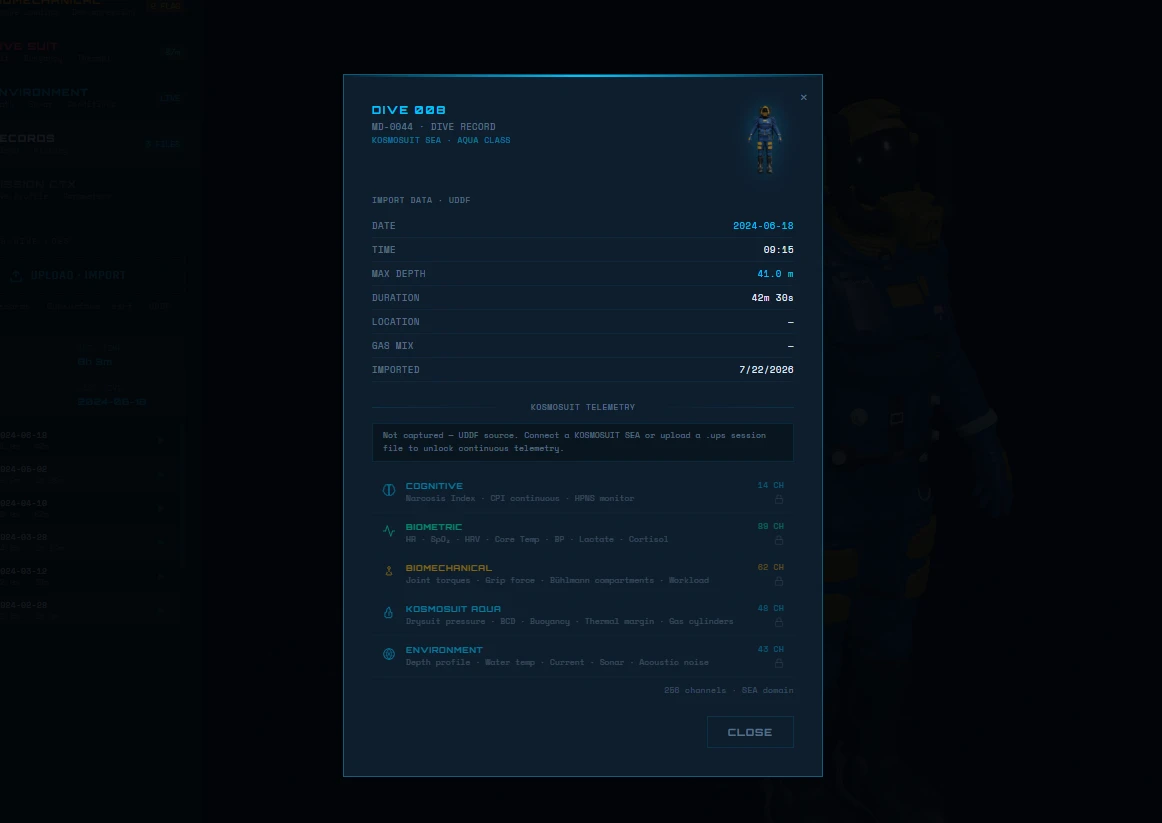
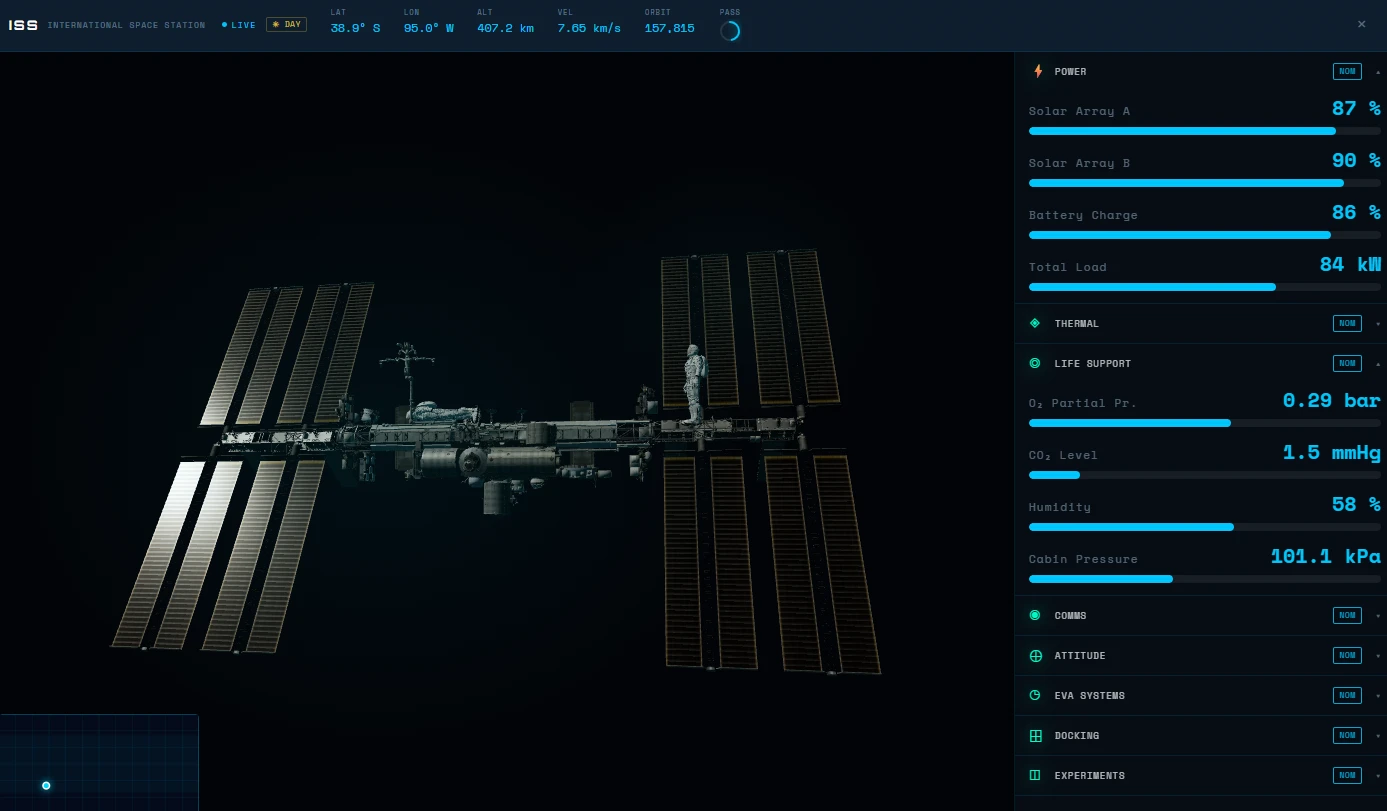
Not the model. The article. This suit, this serial, this exposure history.
Configuration, exposure and subsystem state accumulate as one continuous record. Over a service life that record becomes the maintenance and certification history of the suit itself.
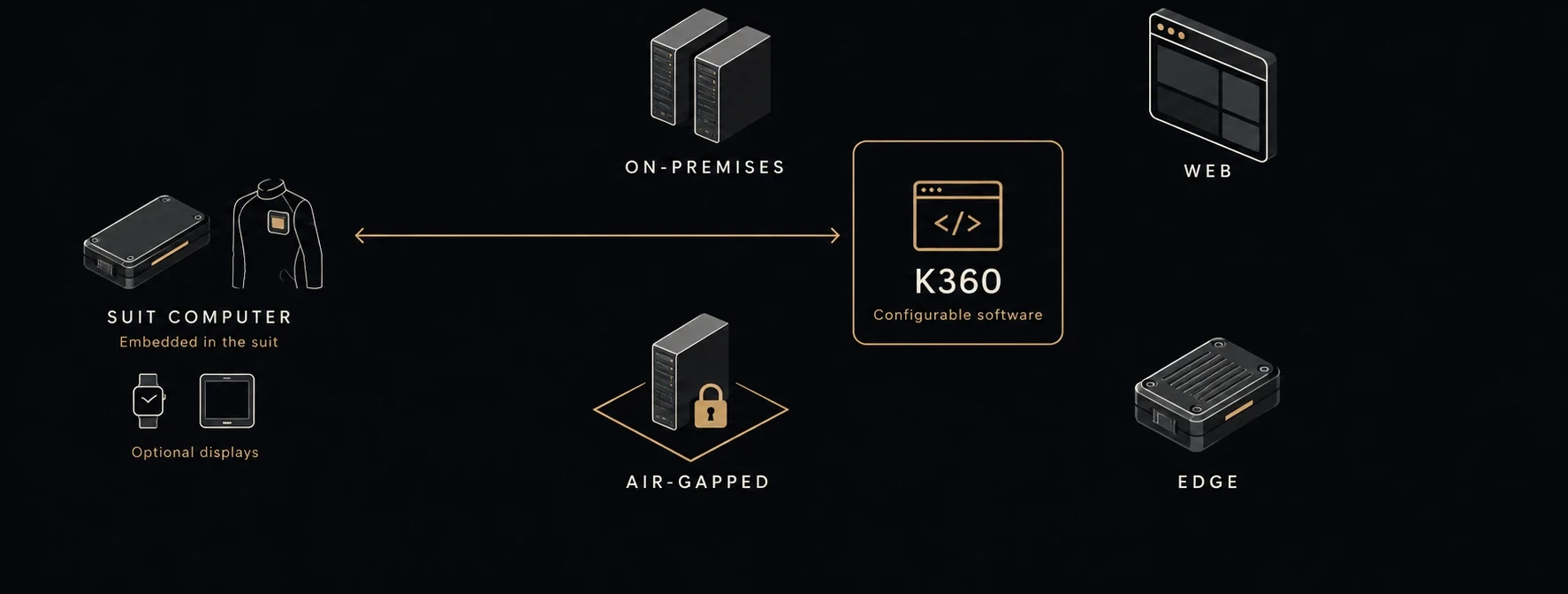
On-premises. Edge. Web. Fully air-gapped.
Kernel360 runs inside the security posture the mission requires, not the one a vendor prefers.