An analog mission instruments its research protocol carefully. Habitat systems, EVA schedules, communication delays, questionnaires and sample collection are all controlled and logged. The crew is sampled, not measured. Adaptation, sleep, autonomic state and crew cohesion — the very variables an analog mission exists to study — are captured through periodic self-report instruments administered at intervals of weeks.
What the analog and ICE mission literature shows
Crew strain follows a shape, and the shape is broadly predictable.
Long-duration isolated, confined and extreme missions produce a characteristic pattern: a cluster of sleep disturbance, impaired cognition, negative affect and interpersonal tension intensifying after the midpoint of the isolation period. The literature remains divided on whether the pattern is universal across mission types and crew compositions — which is itself an argument for measuring rather than assuming.
Bechtel R & Berning A, 1991; Décamps G & Rosnet E, Environ Behav 2005.
The adaptation is physiological, not only psychological.
Continuous monitoring across an Antarctic overwintering found parasympathetic activity during sleep decreasing through the polar night, indicating a distinct seasonal effect on autonomic regulation that is not captured by periodic self-report.
Autonomic regulation across sleep and wake during an Antarctic overwintering, Sci Rep 2026.
The best ICE datasets in existence are still built from questionnaires.
The most rigorous validated datasets on ICE psychological adaptation are built from questionnaires administered at intervals across a year-long overwintering. The instrument design is careful, the sample sizes adequate, the factor structures replicated — and the underlying process is continuous. Mars-duration mission planning is being built on that resolution.
Palinkas LA & Suedfeld P. Psychological effects of polar expeditions.
Why analog missions instrument the habitat and sample the crew
In every finding above, the habitat was instrumented and the crew was sampled.
Analog missions exist specifically to generate human data, and they remain among the few environments where a full physiological picture is both scientifically valuable and ethically straightforward to collect. Yet the core measures are still questionnaires administered monthly. For a Mars-class mission with delayed communications and no evacuation option, a monthly self-report is not a monitoring system — it is a retrospective.
Continuous crew monitoring for analog missions
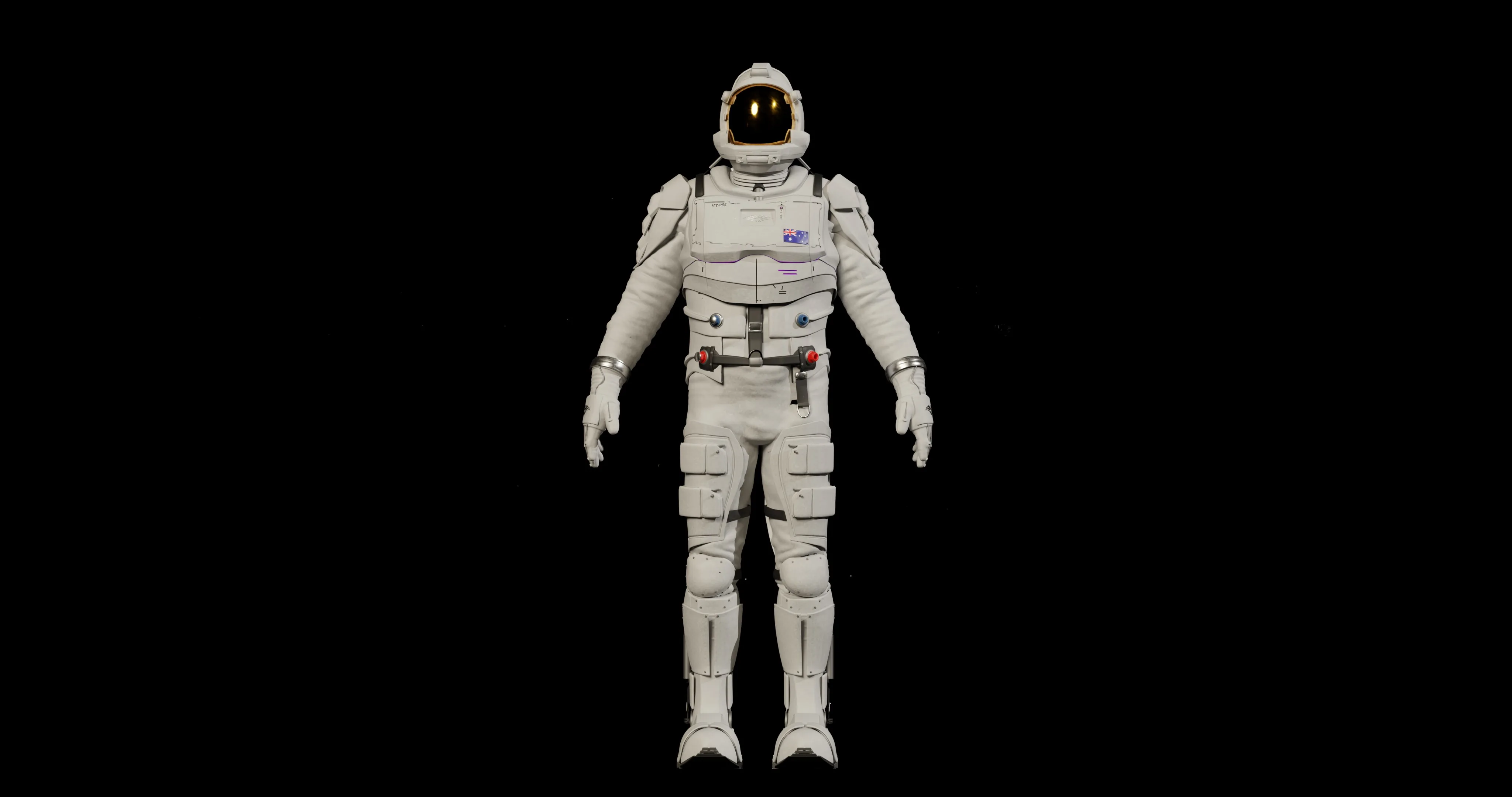
Metakosmos builds suits as platforms. Garment, life-support stack, sensing layer, validation programme and analytics are engineered as one system — so every mission day becomes a measured event with a traceable record, rather than a procedure assumed to have worked.
Continuous sleep architecture, circadian phase and light exposure — the first systems to degrade and the earliest available signal.
Heart-rate variability and parasympathetic reactivation across the mission arc, tracking the adaptation curve rather than sampling it.
Metabolic rate, thermal load and task performance across simulated EVA, correlated with mission-phase adaptation state.
Aggregate crew state supporting autonomous medical decision-making under delayed communications, with individual data privacy preserved by design.
Analog crew telemetry for the mission lead and the engineer
The test, laboratory and field-trial environment — built for the engineers who have to prove the claim.
- Protocol versioning and traceable test records
- Requirement-to-evidence chain, auditable on demand
- Exportable evidence packages for certification
The live operational dashboard, configurable by domain — air, space, sea and land.
- Aggregate crew state under delayed communications, privacy preserved by design
- Crew-surgeon and mission-lead views at differing density
- Sub-250 ms sensor-to-alert design target
Both are sensor-agnostic by design. Neither requires a Metakosmos suit to generate value — an operator can instrument the crews they already run, in the habitats and analogues they already field.
Analog mission validation programme
Sensor operation and data continuity across habitat, suit and EVA phases; delayed-communications and store-and-forward operation.
Multi-month continuous wear characterisation; sensor drift, calibration stability, comfort and skin tolerance.
Cognitive and psychomotor task batteries across the mission arc; workload assessment under simulated EVA and habitat operations.
NASA-STD-3001 human systems integration; NASA NPR 7123.1 and the TRL framework; institutional ethics and data-governance frameworks; ISO 45001.
How to engage on analog missions
A closed session with the CTO and human-systems lead, worked against your operational profile. Outcome: capability brief and Q&A record.
An instrumented analog mission or campaign run against your own protocol. Outcome: crew data pack, research dataset and integration assessment.
Programme-scale deployment with sustainment and analytics. Outcome: in-service capability.
The position
Analog and polar research has characterised the shape of human adaptation to isolation across six decades. What is missing is a platform that measures it continuously rather than sampling it — turning a retrospective literature into a predictive capability before the first Mars-duration crew departs.
Other space domain briefs
Sources
- Décamps G, Rosnet E. A longitudinal assessment of psychological adaptation during a winter-over in Antarctica. Environ Behav 2005.
- Bechtel R, Berning A. The third-quarter phenomenon, in From Antarctica to Outer Space, 1991.
- Palinkas LA, Suedfeld P. Psychological effects of polar expeditions.
- Autonomic regulation across sleep and wake during an Antarctic overwintering. Sci Rep 2026.
Request the full technical whitepaper
The full technical whitepaper includes protocol specifications, sensor validation data and integration requirements.
Request the full technical whitepaper