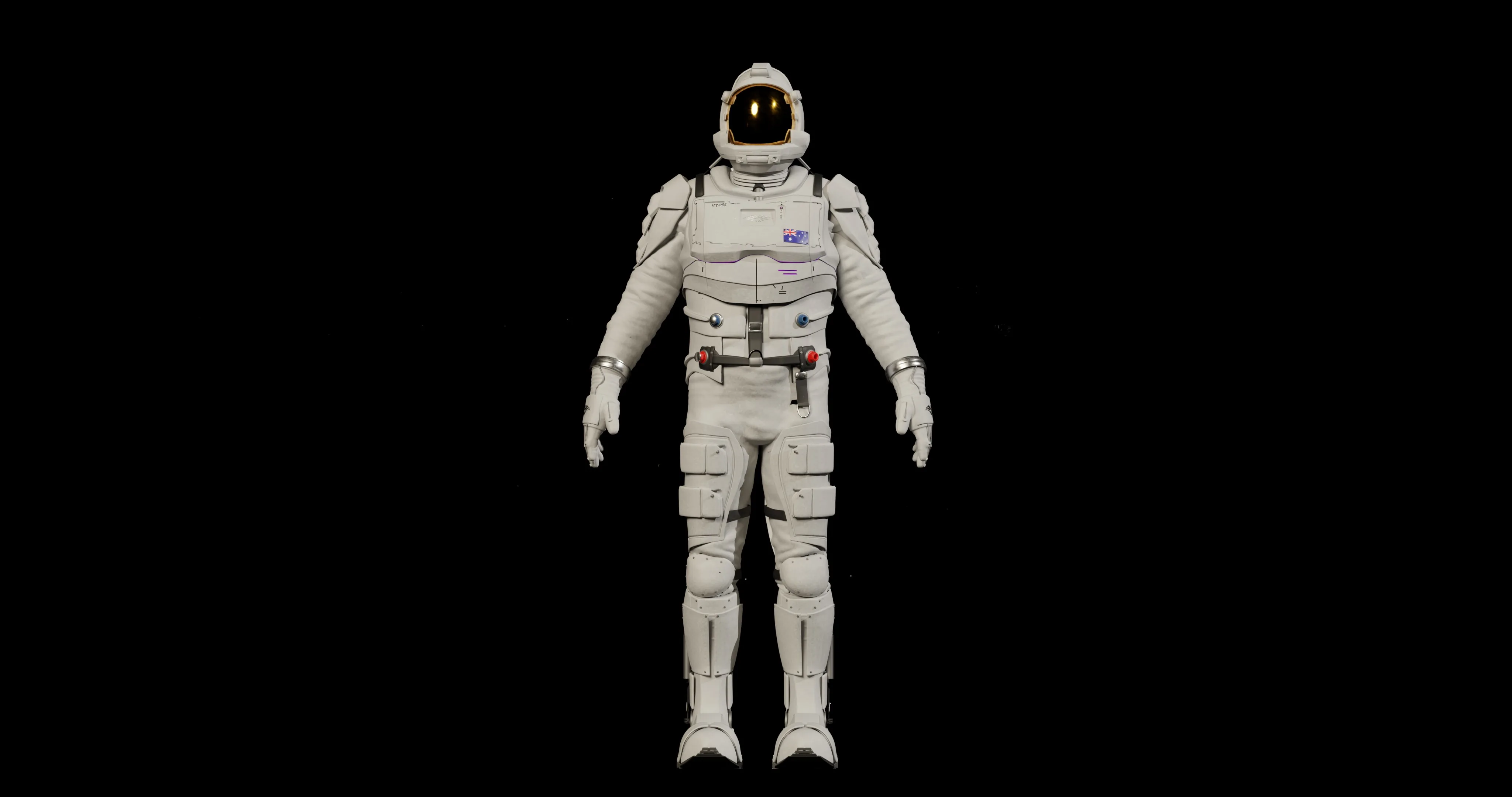
A crewed vehicle instruments every subsystem through ascent and entry. Cabin pressure, structural load, propulsion, guidance and abort modes are telemetered continuously to the ground. The suit's own configuration is not. Whether the glove is connected, the visor is down and the seal is made — the difference between a survivable depressurisation and a fatal one — is confirmed by a verbal call and a checklist item.
What the launch and entry accident record shows
In both fatal decompression events, the suit was not the failure. Wearing it was.
NASA's own technical brief on decompression mishaps states that in both the Soyuz 11 mission of 1971 and the STS-107 Columbia mission of 2003, the crews would have survived the decompression event had they been properly wearing their launch, entry and abort (LEA) suits. The Soyuz 11 crew wore no suits at all. The Columbia crew were likely not wearing gloves, or had visors raised. In one case the protective equipment was absent; in the other it was present and incompletely worn.
NASA OCHMO, NASA-STD-3001 Technical Brief: Decompression Incidents and LEA Suits.
There is no time to correct a configuration error once the event begins.
The Soyuz 11 descent module fully depressurised within 112 seconds of a seal opening after a 0.06-second separation event, and the crew lost consciousness despite an attempt to block the leak. The Columbia crew had roughly 40 seconds between loss of vehicle control and cabin breakup, and the depressurisation occurred too rapidly for any response. Configuration has to be correct before the event, because it cannot be corrected during it.
Soyuz 11 State Commission findings, 1971; Columbia Crew Survival Investigation Report, NASA 2008.
The configuration lapses are rational, and that is exactly the problem.
The Columbia investigation recorded that three crew members were not wearing gloves, one was not in their seat, one was without a helmet and several were not fully restrained. The gloves were off because they are too bulky for certain tasks and there is too little time to prepare for entry. These are not failures of discipline — they are predictable consequences of workload and design. A checklist cannot detect them. Instrumentation can.
Columbia Crew Survival Investigation Report, NASA 2008; NASA OCHMO technical brief.
Why vehicles are instrumented and suit configuration is not
In every finding above, the vehicle was instrumented and the suit configuration was not.
Ascent and entry are the most heavily telemetered phases of any crewed flight, and the crew's own protective configuration is among the very few safety-critical states not reported to the ground. With commercial crew cadence rising and new vehicles entering service, the number of launch and entry events per year is climbing — while the single verified determinant of survival in two historical decompression mishaps is still confirmed by a verbal call.
IVA and launch-entry suits built as monitored platforms
Metakosmos builds suits as platforms. Garment, life-support stack, sensing layer, validation programme and analytics are engineered as one system — so every launch and entry becomes a measured event with a traceable record, rather than a procedure assumed to have worked.
Glove connection, visor position, seal integrity and restraint state reported continuously as a machine-verified LEA suit configuration rather than a verbal call.
SpO₂ and suit-side pressure measured independently of vehicle telemetry, providing an unambiguous signal during a cabin event.
Acceleration exposure, restraint loading and injury-risk indices through ascent, entry and abort profiles.
Core temperature, humidity load and workload through extended pre-launch holds and compressed entry timelines.
Launch and entry telemetry for the flight surgeon and the engineer
The test, laboratory and field-trial environment — built for the engineers who have to prove the claim.
- Protocol versioning and traceable test records
- Requirement-to-evidence chain, auditable on demand
- Exportable evidence packages for certification
The live operational dashboard, configurable by domain — air, space, sea and land.
- Machine-verified suit configuration reported to the ground
- Crew and flight-surgeon views at differing density
- Sub-250 ms sensor-to-alert design target
Both are sensor-agnostic by design. Neither requires a Metakosmos suit to generate value — an operator can instrument the crews they already fly, in the launch-entry suits they already field.
IVA suit validation programme
Rapid decompression profile testing across representative rates; suit relief and ventilation loop behaviour under cabin-loss conditions.
Sled and centrifuge qualification across launch, entry and abort acceleration profiles; sensor integrity under vibration and shock.
Suited task performance and reach envelope in the seat; donning, glove connection and visor timelines under time pressure.
NASA-STD-3001 human systems integration; NASA-STD-6016; NASA NPR 7123.1 and the TRL framework; MIL-STD-1472 human factors.
How to engage on launch and entry operations
A closed session with the CTO and human-systems lead, worked against your operational profile. Outcome: capability brief and Q&A record.
Instrumented ground or flight evaluations run against your own launch and entry profile. Outcome: crew data pack, configuration-assurance analysis and integration assessment.
Programme-scale deployment with sustainment and analytics. Outcome: in-service capability.
The position
The determinants of survival in a rapid cabin depressurisation have been documented by two accident investigations and codified in NASA-STD-3001. What is missing is a platform that verifies, continuously and automatically, that the configuration those findings depend on is actually in place before the event that requires it.
Sources
- NASA Office of the Chief Health and Medical Officer. NASA-STD-3001 Technical Brief: Decompression Incidents and Launch, Entry and Abort Suits.
- Columbia Crew Survival Investigation Report. NASA, 2008.
- Soyuz 11 State Commission investigation findings, 1971.
- Crew survivability after a rapid cabin depressurisation event. NASA NTRS, 2012.
- NASA-STD-3001, Space Flight Human-System Standard.
Request the full technical whitepaper
The full technical whitepaper includes protocol specifications, sensor validation data and integration requirements.
Request the full technical whitepaper