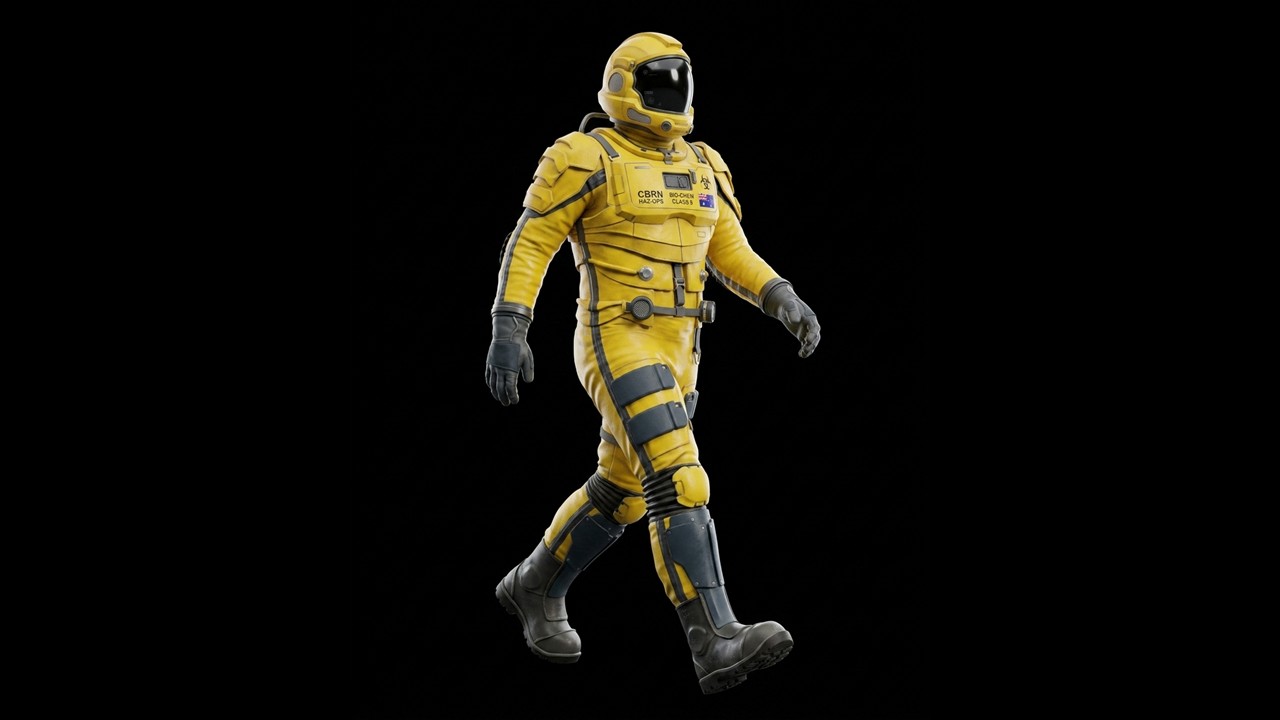
A field campaign instruments its science exhaustively. Sample provenance, sensor calibration, GPS fixes, environmental logging and data integrity are controlled to publication standard. The scientist is not. Exposure, fatigue, hydration and position are managed through a check-in schedule and a satellite messenger, in environments where assistance is hours away and frequently outside communications coverage.
What the fieldwork safety and lone-worker data shows
Working alone is the clearest single risk factor in field fatality data.
A cross-disciplinary synthesis of fieldwork safety literature found that most deaths in the field were unintentional — animal attacks, falls, avalanches, drowning and vehicle accidents — and that four of the eleven student deaths reviewed occurred while the individual was alone. Institutional guidance uniformly recommends teams of at least two, and uniformly acknowledges that solitary work is often unavoidable in practice.
Enabling Fieldwork for All framework, Science Advances; institutional field safety guidance.
The control is a check-in schedule, and it fails in the gap between checks.
A 2021 survey found nearly 70% of organisations had experienced a safety incident involving someone working alone within the previous three years, with around one in five of those incidents described as quite or very severe. The majority of lone workers report frequently working outside mobile coverage. The standard control — periodic check-in — provides no information during the interval in which an incident actually occurs.
National Safety Council, Using Lone Worker Monitoring Technology to Protect Workers.
The hazard set is wider than any single discipline's training covers.
Documented field hazards span rugged and unstable terrain, rockfall and avalanche activity, severe weather, wildlife encounters and exposure to harmful plants and pathogens — compounded where remoteness means slow access to help. Operational hazards add fatigue, unfamiliar heavy equipment and transport risk. A geologist, an ecologist and a glaciologist each face a different subset of the same list, and none of them are instrumented for any of it.
Fieldwork safety planning and risk management, Open Book Publishers 2025; Eos, Playing It Safe in Field Science.
Why field science is instrumented and the scientist is not
In every finding above, the science was instrumented and the scientist was not.
Research institutions apply serious rigour to field data — chain of custody, calibration records, uncertainty budgets. The same institutions manage researcher safety through a risk assessment written before departure and a check-in schedule executed during. The person carrying instruments worth more than their annual salary is themselves the least measured object in the campaign, in the setting where help is furthest away.
Expedition suits built as monitored platforms
Metakosmos builds suits as platforms. Garment, life-support stack, sensing layer, validation programme and analytics are engineered as one system — so every field day becomes a measured event with a traceable record, rather than a procedure assumed to have worked.
Ambient exposure, core and skin temperature and hydration across the field day, matched to the environment actually being worked.
Heart rate, heart-rate variability and cumulative load across multi-day campaigns, informing rest and task allocation.
Motion and fall detection with position and automatic escalation, closing the interval between scheduled check-ins.
Time-synchronised, calibrated physiological records usable as research data in their own right, with documented provenance and uncertainty.
Field telemetry for the safety officer and the engineer
The test, laboratory and field-trial environment — built for the engineers who have to prove the claim.
- Protocol versioning and traceable test records
- Requirement-to-evidence chain, auditable on demand
- Exportable evidence packages for certification
The live operational dashboard, configurable by domain — air, space, sea and land.
- Automatic escalation closing the interval between check-ins
- Field-lead and safety-officer views at differing density
- Sub-250 ms sensor-to-alert design target
Both are sensor-agnostic by design. Neither requires a Metakosmos suit to generate value — an operator can instrument the researchers they already have, on the field kit they already carry.
Field research suit validation programme
MIL-STD-810 and IEC 60529 qualification across the temperature, humidity, dust and immersion envelopes encountered in field science.
Multi-day power budget characterisation; degraded-communications and store-and-forward operation outside network coverage.
Calibration and drift characterisation against reference instruments to research-grade tolerances, with documented uncertainty budgets.
WHS Regulations and lone-worker duties; ISO 45001; institutional field safety and research ethics frameworks; national Antarctic and remote-area programme requirements.
How to engage on field research safety
A closed session with the CTO and human-systems lead, worked against your operational profile. Outcome: capability brief and Q&A record.
An instrumented field campaign run against your own research profile. Outcome: researcher data pack, safety analysis and integration assessment.
Institution- or programme-scale deployment with sustainment and analytics. Outcome: in-service capability.
The position
Field safety guidance has been mature for decades, and its central recommendation — do not work alone — is routinely impossible to follow. What is missing is a platform that closes the interval between check-ins, and that produces physiological data good enough to form part of the research output rather than sit as a safety overhead.
Other land domain briefs
Sources
- Enabling Fieldwork for All (EFFA) Framework: supporting physical, social, financial and psychological safety in the field. Science Advances.
- Playing It Safe in Field Science. Eos, 2022.
- National Safety Council, Work to Zero: Using Lone Worker Monitoring Technology to Protect Workers.
- Miesen F. Fieldwork safety planning and risk management, in The Field Guide to Mixing Social and Biophysical Methods in Environmental Research, 2025.
- Safe Work Australia, remote and isolated work guidance.
Request the full technical whitepaper
The full technical whitepaper includes protocol specifications, sensor validation data and integration requirements.
Request the full technical whitepaper