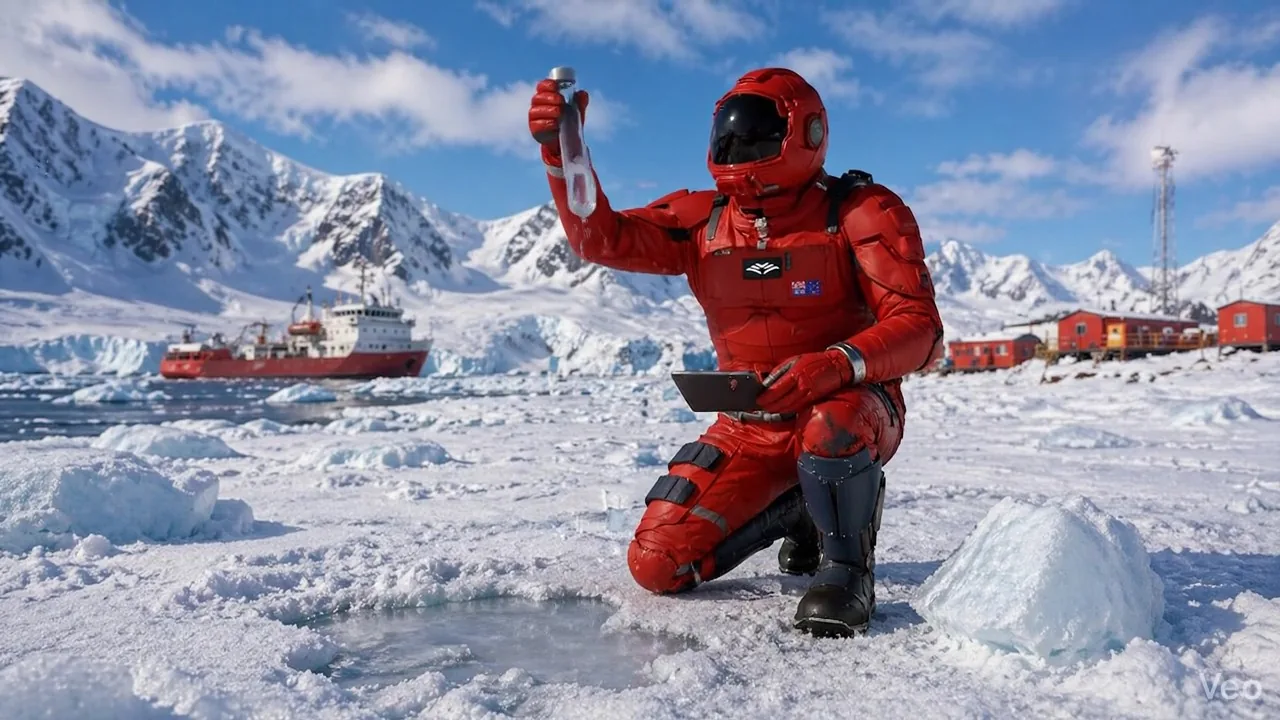
A polar station instruments the environment exhaustively. Wind chill, ambient temperature, whiteout conditions, vehicle status and traverse position are all logged and forecast. The person outside is not. Extremity perfusion, core temperature trend and the slow onset of cold injury are assessed by self-report from someone whose ability to notice is itself being degraded by the cold.
What the cold injury and frostbite data shows
Cold injury has not been engineered out. It has been averaged down.
A systematic review of frostbite in military settings found incidence declining from around 7% to about 1% in armed forces operating in arctic regions — but reaching as high as 20% during small-scale arctic manoeuvres. Cumulative lifetime incidence for all types of frostbite in northern civilian populations may run between 44% and 68%. The fleet-level average conceals an exposure-level risk that remains very high.
Frostbite: a systematic review on freezing cold injuries in a military environment, 2023.
The injury that does the lasting damage happens above freezing.
Non-freezing cold injury develops from prolonged exposure at around 0 °C or above, worsened by wind and moisture, producing vascular and nerve damage without tissue freezing. It develops gradually and is often unrecognised at the time. A four-year follow-up of 26 naval personnel injured on a single expedition found persistent sensory neuropathy and cold hypersensitivity. There is no acute event to respond to — which is precisely why it has to be measured rather than reported.
Four-year follow-up of non-freezing cold injury, Scand J Pain 2019; Francis TJ, J R Nav Med Serv.
Why polar environments are instrumented and people are not
In every finding above, the environment was instrumented and the person was not.
Polar operations run on some of the most disciplined procedural safety cultures anywhere — buddy checks, clothing doctrine, traverse plans, weather holds and station medical support. Every control is calibrated on ambient conditions and applied uniformly across a party whose individual susceptibility varies by a wide margin. The person least able to detect the onset of cold injury is the person experiencing it — and they are the only sensor in the system.
Extreme cold weather suits built as monitored platforms
Metakosmos builds suits as platforms. Garment, life-support stack, sensing layer, validation programme and analytics are engineered as one system — so every traverse becomes a measured event with a traceable record, rather than a procedure assumed to have worked.
Peripheral temperature and perfusion at fingers, toes and face — the sites where injury begins, monitored where self-report fails first.
Continuous core temperature trend with cooling-rate modelling across the exposure, rather than a reading taken on return to station.
Manual dexterity and decision-quality indicators, which degrade well before hypothermia is clinically apparent.
Position, motion and party state across the traverse, with rescue-latency-aware alerting for remote and isolated work.
Polar telemetry for the party lead and the engineer
The test, laboratory and field-trial environment — built for the engineers who have to prove the claim.
- Protocol versioning and traceable test records
- Requirement-to-evidence chain, auditable on demand
- Exportable evidence packages for certification
The live operational dashboard, configurable by domain — air, space, sea and land.
- Intervention-grade alerting to the individual and party lead
- Party-lead and station-medic views at differing density
- Sub-250 ms sensor-to-alert design target
Both are sensor-agnostic by design. Neither requires a Metakosmos suit to generate value — an operator can instrument the expeditioners they already have, on the cold-weather kit they already field.
Cold weather suit validation programme
Cold-soak chambers to −50 °C; extremity perfusion under sustained exposure; wind-chill and moisture-loaded configurations.
Glove, boot and facial interface performance; anti-frost coatings; sensor operation and battery performance at temperature.
Cognitive and dexterity task batteries under cold; degraded manual function and glove-compatible interaction.
ISO 11079 cold environment ergonomics; EN 342 and AS/NZS cold protective clothing; WHS Regulations; Australian Antarctic Program field safety requirements.
How to engage on polar and cold-weather operations
A closed session with the CTO and human-systems lead, worked against your operational profile. Outcome: capability brief and Q&A record.
An instrumented field or traverse evaluation run against your own exposure profile. Outcome: expeditioner data pack and integration assessment.
Station- or programme-scale deployment with sustainment and analytics. Outcome: in-service capability.
The position
Cold injury physiology has been documented since the heroic age of Antarctic exploration, and modern guidelines still list risk factors recognised a century ago. What is missing is a platform that identifies which member of the party is actually approaching injury, rather than applying a party-wide rule to individuals who differ.
Other land domain briefs
Sources
- Frostbite: a systematic review on freezing cold injuries in a military environment, 2023.
- Guly HR. Frostbite and other cold injuries in the heroic age of Antarctic exploration. Wilderness Environ Med 2012.
- Handford C, Thomas O, Imray C. Frostbite. Emerg Med Clin North Am 2017.
- A 4-year follow-up of non-freezing cold injury with cold allodynia and neuropathy in 26 naval soldiers. Scand J Pain 2019.
- Francis TJ. Non-freezing cold injury: a historical review. J R Nav Med Serv.
- Whitaker J. Non-freezing cold injury: lessons from history for future prevention, 2016.
Request the full technical whitepaper
The full technical whitepaper includes protocol specifications, sensor validation data and integration requirements.
Request the full technical whitepaper