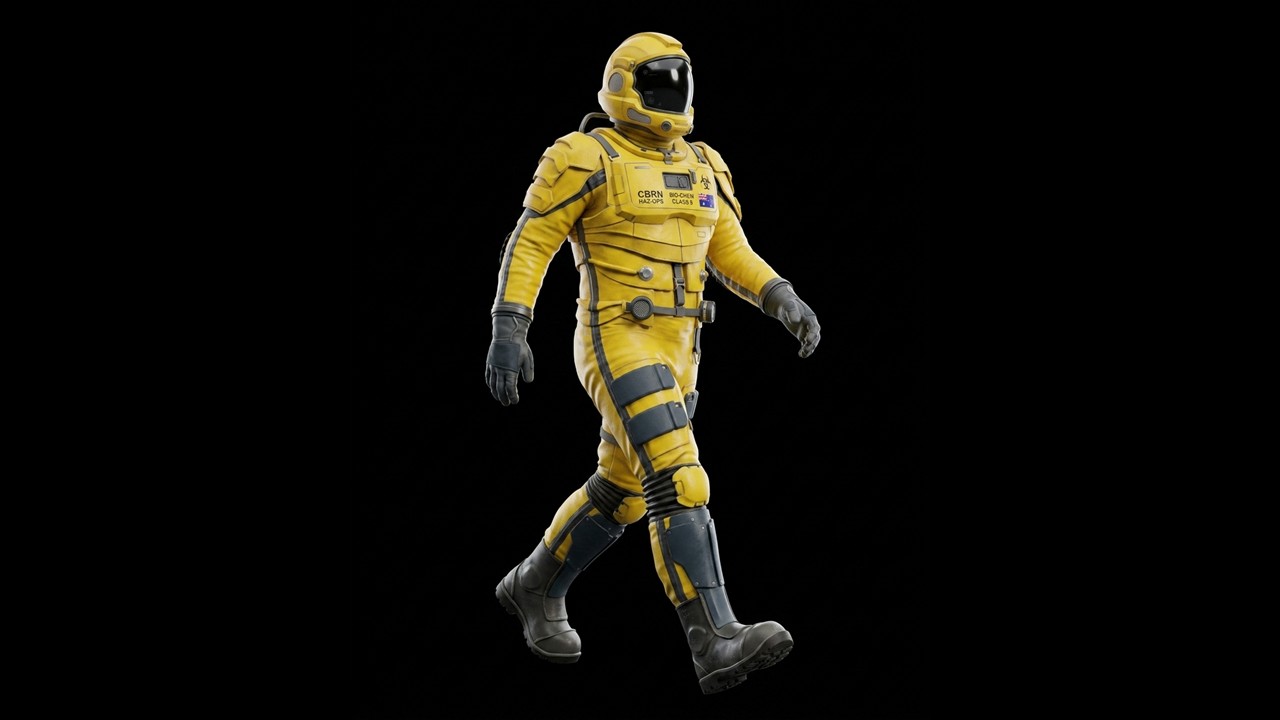
A modern mine or plant instruments everything. Ventilation, gas concentration, equipment health, vehicle telemetry and production rate are all sampled continuously and dashboarded. The worker is not. Core temperature, hydration, exposure dose and cardiac load are assessed at a pre-start questionnaire and reconstructed after an incident — from a WBGT reading that describes the environment, not the person.
What the mining heat strain data shows
Heat strain is not an event. It is a pattern that repeats several times a shift.
NIOSH instrumented US underground miners with ingestible core-temperature sensors across normal working shifts. Subjects changed temperature zone an average of 13.8 times per shift and exceeded the recommended 38 °C limit close to five times per shift, for an average of 26 minutes on each occasion. Reporting only maximum and mean values had concealed this entirely: the strain is intermittent, repeated, and invisible to any check performed at the start or end of a shift.
Yeoman K, DuBose W, Bauerle T et al., J Occup Environ Med, 2019.
Above 38 °C, decision quality goes before the collapse does.
Core temperature above 38 °C is associated with loss of judgment and degraded decision-making during the working period, well before heat exhaustion presents clinically. In one deep underground operation, approximately 170 workers experienced heat strain across a three-month summer period, averaging close to two workers per day showing symptoms. The safety consequence arrives through error long before it arrives through collapse.
Deep underground heat stress field study, Build Environ 2025; Donoghue AM et al., Occup Environ Med 2000.
The exposure is increasing, not decreasing.
Mines are going deeper — metal operations have reached beyond 4,000 m — and ambient conditions are trending hotter. In one gold operation, roughly 80% of open-cut miners recorded core temperatures above the ISO 7933 threshold of 38 °C, and around three quarters of both underground and open-cut workers reported moderate heat illness symptoms. The margin available to procedural controls is narrowing every year.
Thermal exposure and heat illness symptoms in gold mining, Ann Glob Health 2018; NIOSH mining heat stress research.
Why the mine is instrumented and the worker is not
In every finding above, the operation was instrumented and the worker was not.
Australian resources operations run some of the most sophisticated operational technology stacks in industry, and heat is a live obligation under the WHS Regulations and the model Code of Practice for managing the work environment. Yet compliance is demonstrated through work-rest schedules, WBGT readings and hydration policy — environmental proxies for a physiological state nobody measures. When a heat illness event occurs, the individual data needed to explain it does not exist.
Industrial protective suits built as monitored platforms
Metakosmos builds suits as platforms. Garment, life-support stack, sensing layer, validation programme and analytics are engineered as one system — so every shift becomes a measured event with a traceable record, rather than a procedure assumed to have worked.
Continuous core and skin temperature with hydration indicators — exceedances detected and timed rather than inferred from ambient WBGT.
Cumulative gas, particulate and noise dose against the relevant exposure standard, tracked per worker per shift.
Heart rate, heart-rate variability and shift-pattern fatigue modelling across rosters and FIFO cycles.
Motion detection, position and confined-space entry state with direct alerting to the supervisor and control room.
Worker telemetry for the supervisor and the engineer
The test, laboratory and field-trial environment — built for the engineers who have to prove the claim.
- Protocol versioning and traceable test records
- Requirement-to-evidence chain, auditable on demand
- Exportable evidence packages for certification
The live operational dashboard, configurable by domain — air, space, sea and land.
- Intervention-grade alerting to the worker and supervisor
- Supervisor and site-medic views at differing density
- Sub-250 ms sensor-to-alert design target
Both are sensor-agnostic by design. Neither requires a Metakosmos suit to generate value — an operator can instrument the workforce they already have, on the equipment they already issue.
Industrial protective suit validation programme
Climatic chamber human-in-the-loop testing across the industrial thermal envelope; work-rest schedule verification against measured strain.
Quantitative respirator fit and flow verification; gas and particulate dosimetry accuracy against reference instruments.
Electronics qualification for hazardous-area operation to IEC 60079, Class I Division 1 and 2 where required.
WHS Regulations and Safe Work Australia model Codes of Practice; AS/NZS 1715 and 1716; ISO 7933; ISO 45001; IEC 60079; MIL-STD-810.
How to engage on industrial heat strain monitoring
A closed session with the CTO and human-systems lead, worked against your operational profile. Outcome: capability brief and Q&A record.
A single-site instrumented evaluation across a representative shift profile. Outcome: workforce data pack and integration assessment.
Site- or fleet-scale deployment with sustainment and analytics. Outcome: in-service capability.
The position
Occupational heat physiology has been characterised for decades, and the Australian regulatory framework already requires the risk to be managed. What is missing is a platform that produces individual physiological evidence rather than environmental proxies — for the worker, for the supervisor, and for the audit.
Other land domain briefs
Sources
- Yeoman K, DuBose W, Bauerle T, Victoroff T, Finley S, Poplin G. Patterns of heat strain among a sample of US underground miners. J Occup Environ Med 2019.
- Donoghue AM, Sinclair MJ, Bates GP. Heat exhaustion in a deep underground metalliferous mine. Occup Environ Med 2000.
- Thermal exposure and heat illness symptoms among gold mine workers. Ann Glob Health 2018.
- Investigation of heat stress and thermal response in deep hot-humid underground environments. Build Environ 2025.
- Safe Work Australia, model Code of Practice: Managing the Work Environment and Facilities.
Request the full technical whitepaper
The full technical whitepaper includes protocol specifications, sensor validation data and integration requirements.
Request the full technical whitepaper