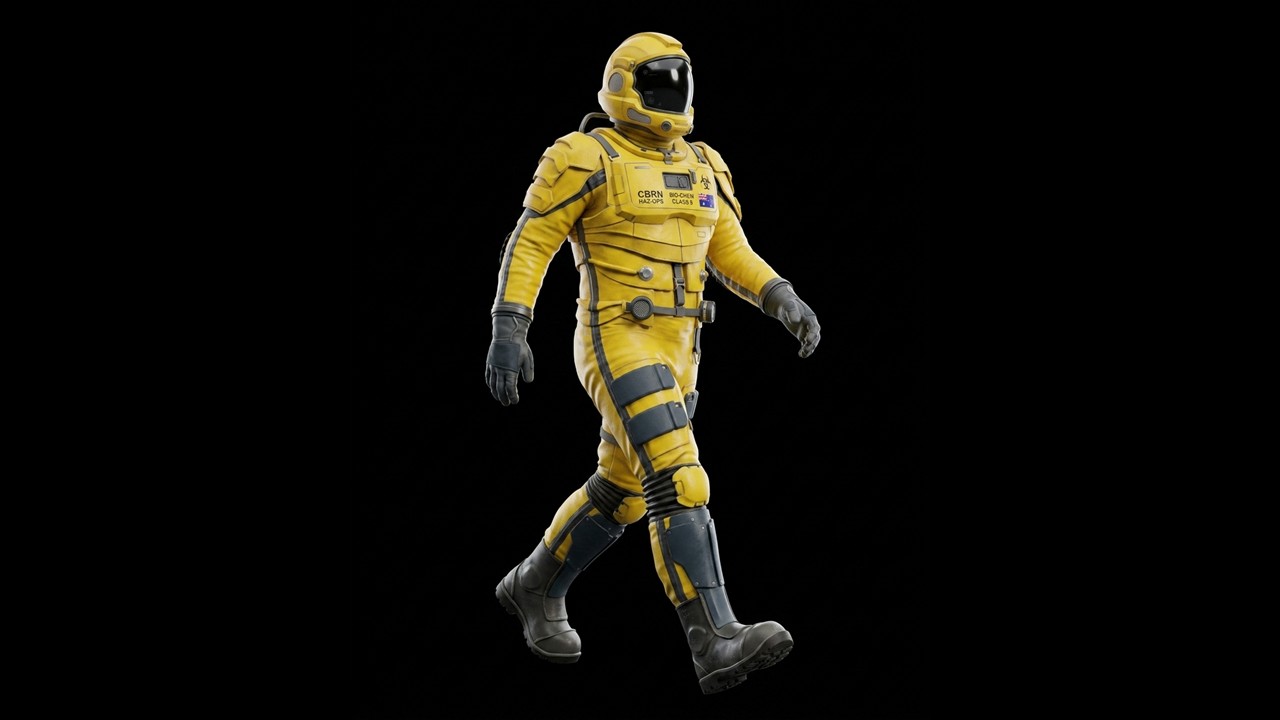
Fireground command instruments the incident. Building layout, water supply, air time, crew accountability and thermal imaging are all tracked. The firefighter is not. The variable that kills more firefighters than fire does — the state of the cardiovascular system inside the turnout ensemble — is not measured at all, on any system the incident commander has.
What the firefighter cardiac fatality data shows
The leading cause of firefighter death is not fire.
Sudden cardiac death accounts for approximately 45% of firefighter duty-related fatalities, and has been the largest single category in almost every year since NFPA records began in 1977. Most people outside the fire service assume burns and smoke inhalation dominate. They do not. The dominant risk is cardiovascular — and it is the one risk the ensemble does nothing to address.
Smith DL, Barr DA, Kales SN, Extreme Physiol Med 2013; NFPA, Firefighter Fatalities in the United States.
The risk is concentrated in a tiny fraction of duty time.
Fire suppression accounts for a small fraction of total annual working time, yet sudden cardiac events cluster overwhelmingly in that window and in the period immediately after. The odds of an event following return from a call remain 2.2 to 10.5 times higher than during non-emergency duties. The exposure is short, extreme and precisely bounded — exactly the kind of window continuous monitoring exists for.
Smith DL et al., 2013; Kales SN et al.; NFPA fatality analyses.
The precursor signal is measurable. It is simply not measured on the fireground.
Impaired parasympathetic reactivation after exertion is associated with cardiac risk and is measurable through post-exercise heart-rate recovery — a metric captured routinely in sports science and clinical cardiology. A study of firefighter recruits across a training academy documented that parasympathetic reactivation improved with physical conditioning, confirming that the signal is present, variable across the population, and responds to intervention. It is not captured on the fireground.
Influence of a training academy on parasympathetic nervous system reactivation of firefighter recruits, Int J Environ Res Public Health 2021.
Why the fireground is instrumented and the firefighter is not
In every finding above, the incident was instrumented and the firefighter was not.
Modern incident command has excellent situational awareness of the building, the fire and the air supply, and personal alert safety systems detect immobility. None of it observes cardiac strain, thermal load or recovery state — the physiology behind almost half of all line-of-duty deaths. A firefighter can be at 95% of maximum heart rate on a third cylinder and appear, on every system the incident commander has available, entirely nominal.
Firefighter suits built as monitored platforms
Metakosmos builds suits as platforms. Garment, life-support stack, sensing layer, validation programme and analytics are engineered as one system — so every incident becomes a measured event with a traceable record, rather than a procedure assumed to have worked.
Continuous heart rate, heart-rate variability and post-exertion recovery — the precursor signal for the leading cause of death, surfaced to the incident commander.
Core and skin temperature under encapsulation; heat-storage rate through the working cycle and through rehabilitation.
SCBA flow, consumption rate and facepiece seal integrity, correlated with work rate rather than reported as time remaining alone.
Position, motion and crew-level physiological picture supporting rehab decisions and crew rotation.
Firefighter telemetry for the incident commander and the engineer
The test, laboratory and field-trial environment — built for the engineers who have to prove the claim.
- Protocol versioning and traceable test records
- Requirement-to-evidence chain, auditable on demand
- Exportable evidence packages for certification
The live operational dashboard, configurable by domain — air, space, sea and land.
- Intervention-grade alerting to the crew and incident commander
- Incident-commander and rehab views at differing density
- Sub-250 ms sensor-to-alert design target
Both are sensor-agnostic by design. Neither requires a Metakosmos suit to generate value — an operator can instrument the firefighters they already have, on the turnout gear they already wear.
Firefighter suit validation programme
Climatic and thermal chamber testing across the interior attack envelope; sensor survivability at ensemble interface temperatures.
SCBA integration and quantitative facepiece fit verification; flow and consumption characterisation under representative load.
Cognitive and dexterity task batteries under heat and load; rehabilitation-phase recovery measurement against recovery norms.
AS/NZS 4967 structural firefighting PPE; AS/NZS 1716 respiratory protection; NFPA 1971 and 1582 equivalents; WHS Regulations; ISO 45001.
How to engage on firefighter monitoring
A closed session with the CTO and human-systems lead, worked against your operational profile. Outcome: capability brief and Q&A record.
Instrumented training burns or live incidents run against your own response profile. Outcome: crew data pack, rehab analysis and integration assessment.
Brigade- or service-scale deployment with sustainment and analytics. Outcome: in-service capability.
The position
The fire service has known for nearly fifty years that cardiac events are its leading cause of death, and the physiological precursors are documented. What is missing is a platform that puts that signal in front of the incident commander while the crew is still working, rather than in a fatality investigation afterwards.
Other land domain briefs
Sources
- Smith DL, Barr DA, Kales SN. Extreme sacrifice: sudden cardiac death in the US Fire Service. Extreme Physiol Med 2013.
- NFPA, Firefighter Fatalities in the United States, annual reports.
- Fahy RF, Molis JL, NFPA fatality trend analyses.
- Sudden cardiac death among firefighters aged 45 and under in the United States, Am J Cardiol.
- Influence of a training academy on parasympathetic nervous system reactivation of firefighter recruits, Int J Environ Res Public Health 2021.
- NIOSH Fire Fighter Fatality Investigation and Prevention Program.
Request the full technical whitepaper
The full technical whitepaper includes protocol specifications, sensor validation data and integration requirements.
Request the full technical whitepaper